
Kubernetes Cost Optimization: 10 Proven Strategies to Cut Your Cloud Bill
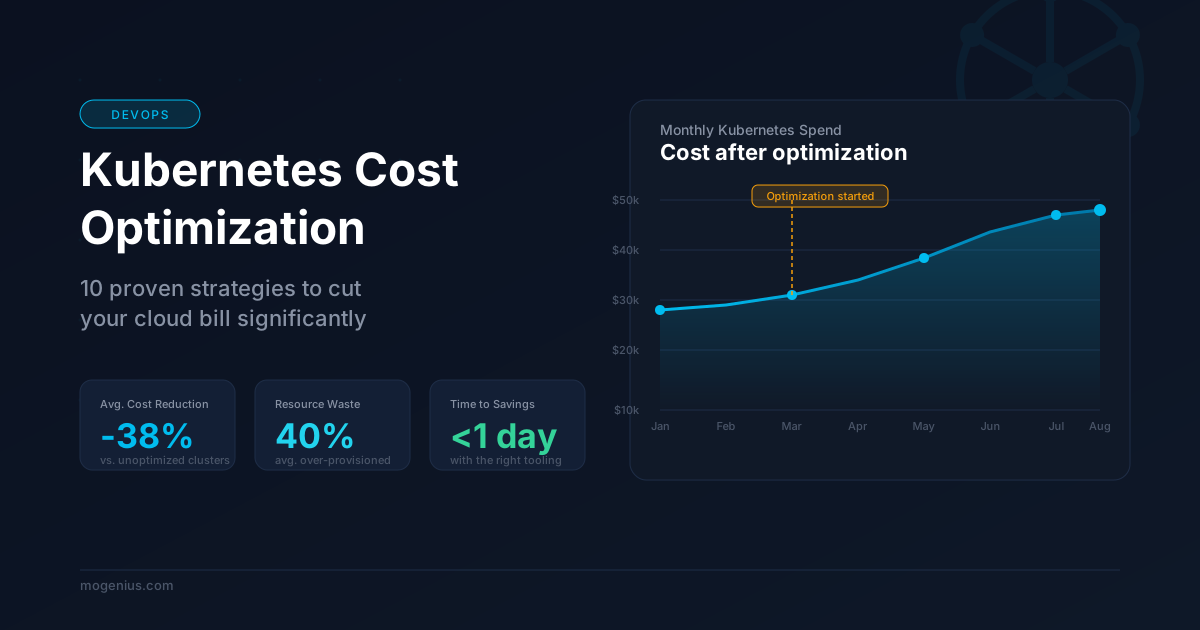
Running Kubernetes at scale is powerful – but without proper governance, costs spiral quickly out of control. Analysts estimate that organizations waste up to 40% of their Kubernetes cloud spend on idle or over-provisioned resources. The good news: most of this waste is preventable. In this guide, we share 10 battle-tested strategies to meaningfully reduce your Kubernetes cloud bill – without sacrificing stability or developer experience.
Why Kubernetes Costs Spiral Out of Control
Before optimizing, you need to understand the root causes. The most common Kubernetes cost drivers are:
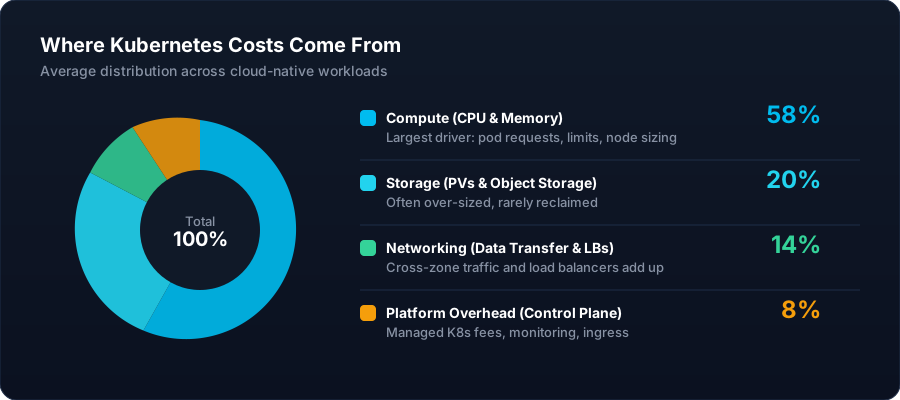
- Over-provisioning: Pods request far more CPU and memory than they actually consume
- Idle workloads: Development and staging environments run around the clock, even on weekends
- Uncontrolled storage: Persistent Volumes grow without bounds and are rarely reclaimed after deletion
- Lack of visibility: Teams don't know which services drive the biggest costs
- Underutilized nodes: Nodes run at 20–30% utilization because workloads aren't packed efficiently
The chart below illustrates a typical cost distribution across Kubernetes environments:
10 Strategies to Optimize Kubernetes Costs
1. Right-Size Workloads with the Vertical Pod Autoscaler (VPA)
The Vertical Pod Autoscaler analyzes historical resource consumption and automatically recommends – or enforces – appropriate CPU and memory requests and limits. Instead of setting generous, static values, limits are aligned to actual usage patterns. In practice, VPA typically reduces compute costs by 20–35% for stateless workloads. Start in "recommendation mode" to review suggestions before applying them automatically.
2. Scale Horizontally with HPA Based on Real Metrics
The Horizontal Pod Autoscaler scales pod replicas up during peak load and down during quiet periods. Beyond CPU and memory, configure HPA with custom metrics (e.g., request latency, queue length) to match scaling behavior to your application's actual demand. For workloads with predictable patterns – such as e-commerce or SaaS APIs – this alone can cut compute costs by 25–40%.
3. Enable the Cluster Autoscaler for Node-Level Efficiency
The Cluster Autoscaler removes underutilized nodes from the cluster and provisions new ones only when workloads can no longer be scheduled. It's most effective when combined with a mix of instance types. Configure node pools with different sizes to improve bin-packing and reduce the number of underutilized nodes sitting idle.
4. Use Spot or Preemptible Instances for Fault-Tolerant Workloads
Spot Instances (AWS), Preemptible VMs (GCP), and Spot VMs (Azure) are available at 60–80% lower cost than on-demand instances – at the tradeoff of potential interruption. For CI/CD runners, batch jobs, data processing, and stateless microservices, this tradeoff is usually acceptable. Use Node Affinity, Pod Disruption Budgets, and graceful termination handlers to safely run workloads on spot capacity.
5. Enforce Resource Quotas and LimitRanges per Namespace
Without guardrails, individual teams can claim more resources than needed. ResourceQuotas cap total CPU and memory per namespace, while LimitRanges define default requests and limits for pods that don't specify their own. This prevents a single misconfigured deployment from exhausting cluster capacity – and enforces cost ownership at the team level.
6. Automatically Scale Down Dev and Staging Environments
Development and staging workloads are typically only needed during business hours. By automatically scaling them to zero at night and on weekends – via CronJobs, Kubernetes Downscaler, or built-in platform scheduling – you can reduce costs for non-production environments by up to 70%. mogenius makes this trivially easy through workspace-level scheduling controls.
7. Audit and Optimize Persistent Volume Usage
Persistent Volumes are frequently over-sized at creation and left unreclaimed after pods are deleted. Regularly audit PVCs in "Released" or "Available" state and clean up unused volumes. Additionally, choose the right storage class: Premium SSD is rarely needed for dev workloads. Setting the reclaim policy to Delete for dynamic volumes ensures automatic cleanup when a PVC is removed.
8. Consolidate Environments with Multi-Tenancy
Running separate clusters for each team or project multiplies your control plane, networking, and observability overhead. A well-governed multi-tenant cluster – with RBAC, namespace isolation, and network policies – reduces infrastructure overhead significantly. mogenius provides the tooling to operate multi-tenant Kubernetes safely, without compromising team autonomy or security.
9. Implement Cost Allocation with Labels and Tagging
You can't optimize what you can't measure. Establish a consistent labeling strategy across all Kubernetes resources (team, project, environment, cost center) and integrate with tools like Kubecost, OpenCost, or your cloud provider's cost explorer. With proper tagging, you can attribute costs to specific teams and products – turning cloud spend from a black box into an actionable metric.
10. Leverage a Kubernetes Management Platform for Continuous Optimization
Implementing and continuously monitoring all nine strategies above is operationally intensive for any team. A Kubernetes management platform like mogenius automates much of this work: from resource dashboards with cost transparency and automated namespace management, to AI-powered troubleshooting insights that help developers resolve issues before they drive up compute costs. Teams gain control over their Kubernetes spend without needing a dedicated FinOps engineer for every configuration change.
How Much Can You Actually Save?
Based on experience from 100+ Kubernetes projects, teams that systematically apply these strategies typically achieve:
- 20–35% compute savings from right-sizing and VPA
- 50–70% reduction in non-production environment costs through scheduled scale-down
- 15–25% storage savings from PV cleanup and appropriate storage class selection
- 60–80% cost reduction for eligible workloads moved to spot instances
In aggregate, most organizations can reduce their Kubernetes cloud spend by 30–50% – while improving reliability and developer productivity at the same time.
Conclusion: Cost Optimization is a Process, Not a Project
Kubernetes cost optimization is not a one-time task. It requires continuous visibility, automated guardrails, and a culture where teams take ownership of their infrastructure costs. The good news: with the right tooling, most of the heavy lifting can be automated.
Want to see how mogenius can help you gain control over your Kubernetes costs? Talk to our team – we'll walk through your current environment and identify concrete savings opportunities.
FAQ
Interesting Reads
The latest on DevOps and Platform
Engineering trends
Subscribe to our newsletter and stay on top of the latest developments